
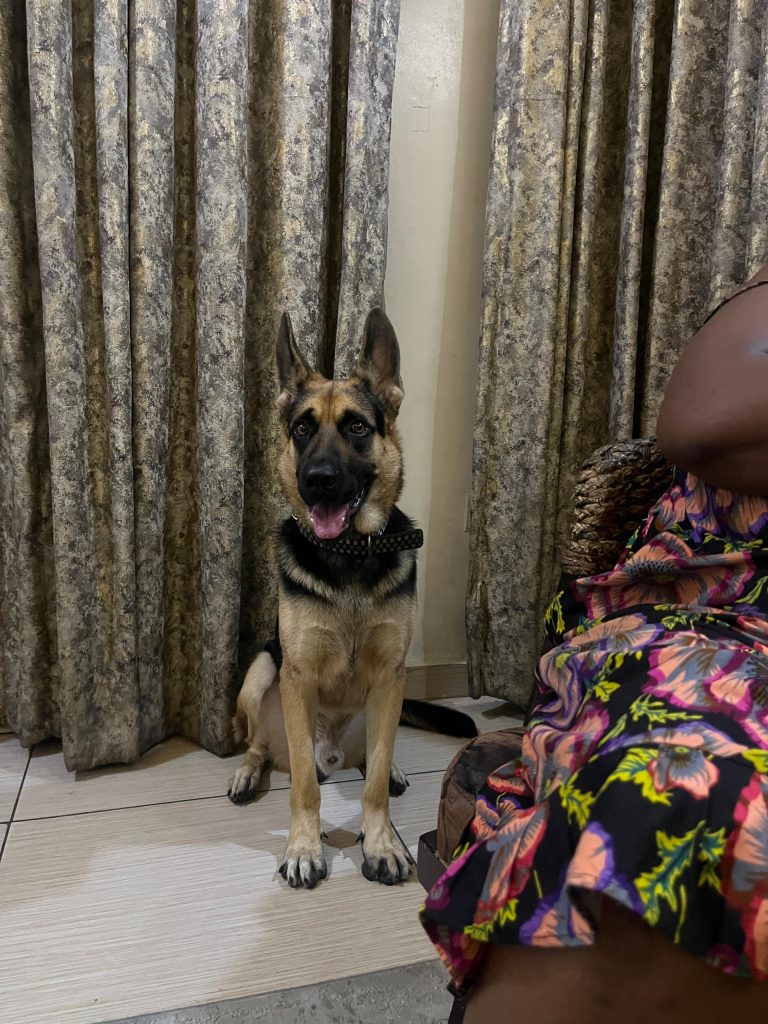
THE GERMAN SHEPHERD: WHERE DID THE BREED COME FROM — AND WHICH TYPE IS BEST?
There is a lot of confusion today about German Shepherds. Some people prefer the heavily sloping “show line” dog, others prefer the straight-backed working dog, and some believe the old German Shepherd looked more like a Belgian Malinois.
So, where did the German Shepherd actually come from?
🇩🇪 WHO FOUNDED THE GERMAN SHEPHERD BREED?
The man generally regarded as the founder of the modern German Shepherd Dog is Captain Max von Stephanitz, a German cavalry officer.
In 1899, von Stephanitz saw a working shepherd dog named Hektor Linksrhein, which he purchased and renamed Horand von Grafrath.
Horand became the foundation dog of the German Shepherd breed, and von Stephanitz founded the Verein für Deutsche Schäferhunde (SV) , the German Shepherd Dog Society.
However, Horand did not simply appear from nowhere.
Before the breed was formally established, Germany already had many regional shepherd and farm dogs. These dogs varied considerably in size, colour, coat and structure.
Von Stephanitz and other breeders selected these existing German herding dogs for qualities such as:
- intelligence
- courage
- obedience
- endurance
- working ability
- sound movement
- strength and stamina
The goal was not originally to create a fashionable-looking dog.
The goal was to create the ultimate working shepherd dog. - WAS RIN TIN TIN A TYPICAL GERMAN SHEPHERD?
Yes — by the standards of his period.
Rin Tin Tin was a German Shepherd rescued from a German military kennel after World War I and brought to America.
He became an international film star in the 1920s.
Look at photographs of Rin Tin Tin and compare him with many modern show-line German Shepherds.
You may notice something interesting:
He had a much more moderate, athletic outline.
He did not have the extremely exaggerated rear angulation that can be seen in some modern show dogs.
He looked like a dog capable of running, jumping and working.
But we should be careful about saying that Rin Tin Tin represents the “original” German Shepherd perfectly. The breed was already developing and changing during his lifetime, and there was never just one fixed body shape.
STRAIGHT-BACKED GERMAN SHEPHERDS — DO THEY LOOK LIKE MALINOIS?
Some working-line German Shepherds certainly have a silhouette that reminds people of the Belgian Malinois.
They may have:- a relatively straight topline
- less rear angulation
- a lighter, athletic body
- longer legs
- a tighter, more functional frame
- a very pronounced working-dog appearance
But a German Shepherd is not supposed to be a Malinois.
They are two different breeds with different histories and breed standards.
The resemblance comes largely from selecting both breeds for athletic working ability rather than exaggerated show-ring features. - 🇩🇪 WHAT ABOUT DDR GERMAN SHEPHERDS?
“DDR German Shepherd” generally refers to bloodlines developed in East Germany (the former German Democratic Republic) during the Cold War.
These dogs were heavily selected for police, military and service work.
Many DDR dogs became known for being:
strong, athletic, substantial, tough and functional.
They are often associated with heavier bone, strong heads, powerful bodies and relatively moderate backs and rear angulation.
But are DDR dogs automatically the best German Shepherds?
No.
That is too simple.
A good working German Shepherd is not determined by whether its pedigree contains the word DDR.
There are excellent working dogs from different German, Czech, West German and other working lines.
What matters is the individual dog’s:
health + temperament + nerves + drives + structure + trainability + working ability.
THE DIFFERENT TYPES OF GERMAN SHEPHERDS TODAY
People often talk about “German,” “American,” “DDR,” “Czech,” “working line” and “show line” German Shepherds.
These terms can be useful, but they are not always separate breeds.
They are generally different breeding lines and selection traditions within the German Shepherd Dog.
For example:
🇩🇪 German Show Lines
Often bred toward the German/FCI show standard, with more emphasis on conformation and movement.
🇩🇪 German Working Lines
Selected more heavily for working ability, drives, endurance and temperament.
🇨🇿 Czech Working Lines
Often associated with police and service-dog breeding and strong working characteristics.
🇩🇪 DDR Lines
East German working heritage, particularly associated with military and police work.
🇺🇸 American Show Lines
Often have a more pronounced sloping appearance and are frequently lighter in substance than some European working lines.- American/Canadian Working Lines
Less common than the major show-line population but bred specifically for performance and working ability.
🔥 SO WHICH BODY TYPE IS BEST?
This is where I think we need to be careful.
A German Shepherd should not be judged simply by asking:
“Is the back straight or sloped?”
The real question should be:
“Can this dog function properly?”
A good German Shepherd should be able to:
run, turn, jump, work for long periods, recover from exertion and move efficiently without being compromised by its structure.
The German Shepherd standard itself does not call for a completely flat, ruler-straight back.
Likewise, a proper German Shepherd should not be so excessively angulated that its structure interferes with athletic function.
🏆 MY VIEW
If we are talking about a working German Shepherd, I personally find the moderate, athletic working type more convincing than an exaggerated show type.
But I would not say:
“DDR is automatically the best.”
Nor would I say:
“Straight back is automatically the best.”
The best German Shepherd is the one that combines sound structure, good health, stable nerves, intelligence, trainability and genuine working ability.
And perhaps the most important lesson from Max von Stephanitz is this:
“Take heed that my shepherd dog remains a working dog.”
The German Shepherd was created first and foremost to work.
Whatever its bloodline, a German Shepherd should never become merely a beautiful dog that has forgotten what it was bred to do.
#GermanShepherd #GSD #WorkingGermanShepherd #DDRGermanShepherd #CzechGermanShepherd #GermanShepherdDog #RinTinTin #MaxVonStephanitz #WorkingDogs #DogBreeds
Alpha Photo Credit Taiwo THOMPSON
My view.
I couldn’t agree more, than the comments
The best German Shepherd is the one that combines sound structure, good health, stable nerves, intelligence, trainability and genuine working ability
Absolutely!
My view.
I couldn’t agree more, than the comments
Though I was a big fan of the slant back German Shepherd, but when it comes to sound structure, good health and ability to run and jump around with ease, none is compared to the straight working class. They are sound breeds and extremely intelligent, The German Shepherd straight back working class.
Like in some things in life, the myths and fables are more embraced than the facts/ Truth.
Form and function is priority in all Dog breeds.